
What a Professional Organizer Wishes Everyone Knew About Decluttering
A home organizing project is rarely about just making everything fit or making it pretty. It usually starts with decluttering and dealing with any emotional attachments you may have to all the stuff in your home.
In my years as a professional organizer, I’ve learned that decluttering has layers.
People can be very attached to their things.
Clutter can become emotional.
Organizing is unique to each individual.
I’ve also learned that many people care about how they declutter. They don’t want everything tossed in the trash. They want to make thoughtful, sustainable choices and know their belongings are going somewhere useful. Sustainability and minimalist design are hallmarks of my business, and I’m grateful to work with clients and local Atlanta partners who care about reducing waste, too.
But of all the lessons I’ve learned in my time as a professional organizer, the biggest takeaway is that many of us are dealing with more stuff than our homes can hold. We provide several different services — unpacking moves, closet organization, digitizing — but the bulk of what we do is decluttering. It’s where everything starts.
That’s why I wanted to share more about some of the biggest lessons I’ve learned over the years helping people organize their stuff and their homes. Because so much of this is extremely common, and I know these lessons can help others.
Ready? Here’s a little bit of what I’ve learned.

I’m sharing a few of the lessons I’ve learned through my years of work as a professional organizer. I hopw these are helpful!
Lesson 1: It’s okay if it takes time to feel ready.
Most of the time, people call me after they’ve thought about decluttering for a few months. Usually, it takes people a good three to six months to feel ready.
By the time they reach out, most people are ready. They’ve had time to adjust to the idea of letting go, and they want help moving through the process.
But people often realize they have too much stuff, and that it’s a problem, and then they need to get comfortable with the idea of getting rid of some of their belongings. It doesn’t matter if it’s piles of paper, books, clothes you haven’t worn in 5 years, or china you’ve never used. It may take a bit of a mental shift before you even reach out for help.
Know that it’s common, and it’s okay if you need time to adjust to the idea of decluttering.
Sometimes it goes the other way around. Someone reaches out to me, but they’re not quite ready to move forward. I don’t hear back from them right away. They often call back about six months later. I give people grace because I know that sometimes it just takes a minute to get comfortable with the idea of going through your things and decluttering.
People also have to get used to the idea of inviting someone into their home.
Lesson 2: Clutter is emotional, not just physical.
Sometimes, the initial hesitation to commit to an organizing or decluttering project is caused by shame. It can be difficult to invite someone into your home when it’s not looking its best. We see the most personal areas and spaces, all your belongings, and how you actually live.
People can be very attached to their things. Even when someone has thought about decluttering for months, letting go can still be harder than they expected.
It hasn’t happened many times, but we’ve had a handful of clients who have sort of fought us on purging their stuff. Once we get there, they think they're ready, and they're actually not.
It’s surprising to clients, too! You may not realize you have such an emotional attachment to your stuff until you start sorting and deciding what to get rid of.
I’ve had clients who are surprised going through the process. They say, “Why is this so hard? Why is it so hard to make this decision? Why can’t I let this go?”
And sometimes an item can make them sad, and they still want to hold on to it.
They know they need to let it go. We give people grace when this happens because it is hard.
My advice with things that may be particularly difficult to let go of is to put it somewhere else for a bit, out of sight or in a different room. Then let it go in six months when you’re ready.
You can’t always do it all at once. And everybody’s different. It’s very personal. There isn’t a one-size-fits-all for letting things go or for organizing.
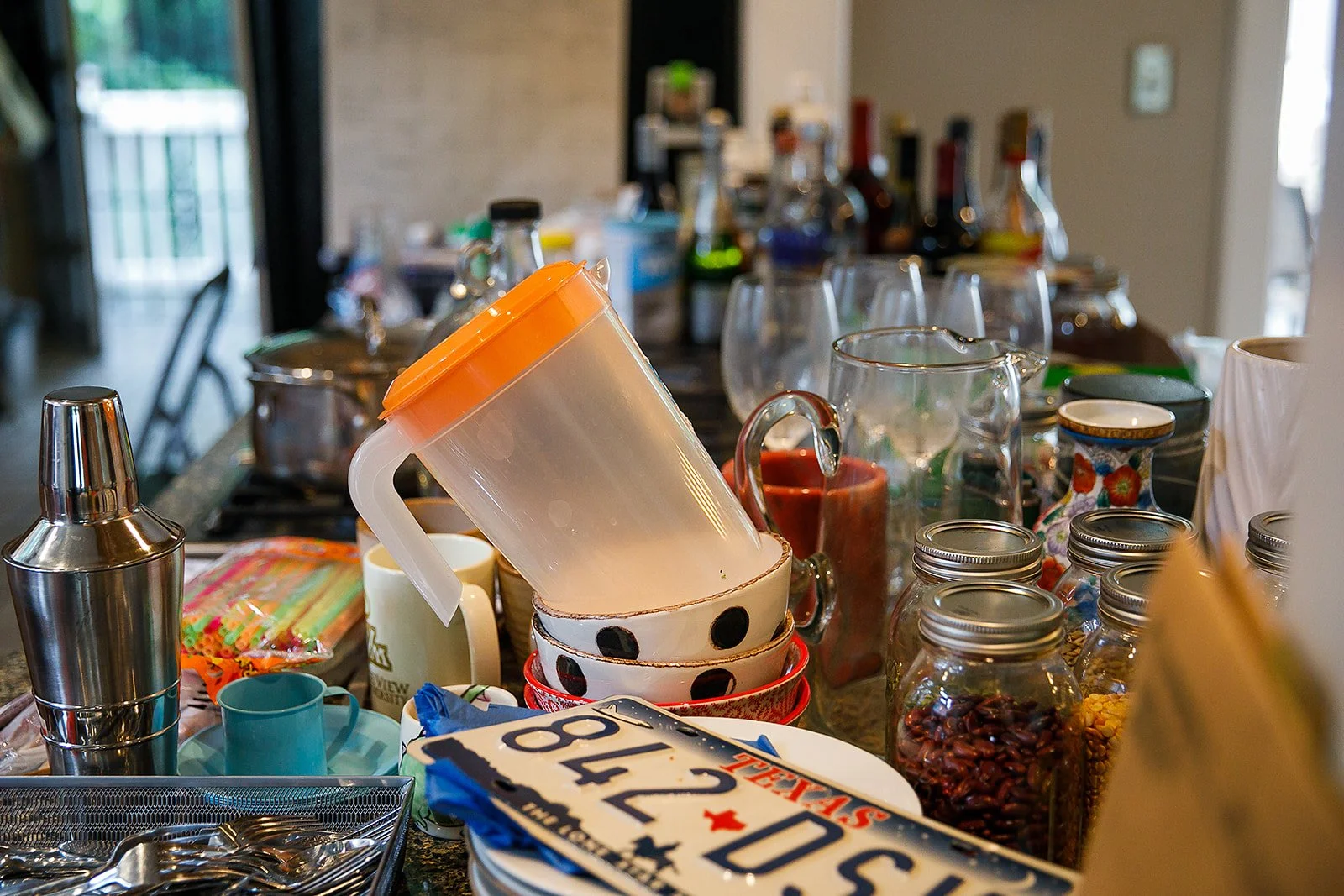
Organizing starts with purging because many of us have too much stuff. Once you pull everything out of cabinets or closets, you see how much you actually have. It’s easier to make decisions when you can see everything.
Lesson 3: You can’t organize your way out of too much stuff.
Although I’ve listed this one third, I would say this is one of the biggest lessons I’ve learned over the years, and it’s that we all have too much stuff.
We don’t just organize. You have to get rid of things because we’re not magicians. We can’t magically fit all of your stuff into a space that simply doesn’t have room for it.
People think they need better organization when what they really need is less volume. That’s the part that usually surprises people the most.
A client might think a closet will take a couple of hours to organize. Then we start taking everything out, grouping things into categories, and suddenly they can see the true volume of what they own. All the shoes are together. All the shirts are together. All the pants, bags, jackets, and accessories are together.
And that’s when people say, “Oh my gosh. How did I get here?”
It’s very common. Most people have no real concept of how much they have because it’s been shoved into drawers, closets, bins, cabinets, and extra rooms. They know the space feels overwhelming, but they don’t always know why until everything is out where they can see it.
This is why purging has to come before organizing. If you have too much stuff for the space, no organizing system is going to solve that long-term.
You cannot organize your way out of volume. You have to do the hard work of deciding what stays and what goes.
Lesson 4: Buy the bins after you declutter, not before.
I know organizing bins and containers are fun. They look pretty, and they make us feel like we’re about to solve the problem. It’s easy to understand why people like them.
But I always tell people not to buy the bins first.
Declutter first. Then decide what you actually need.
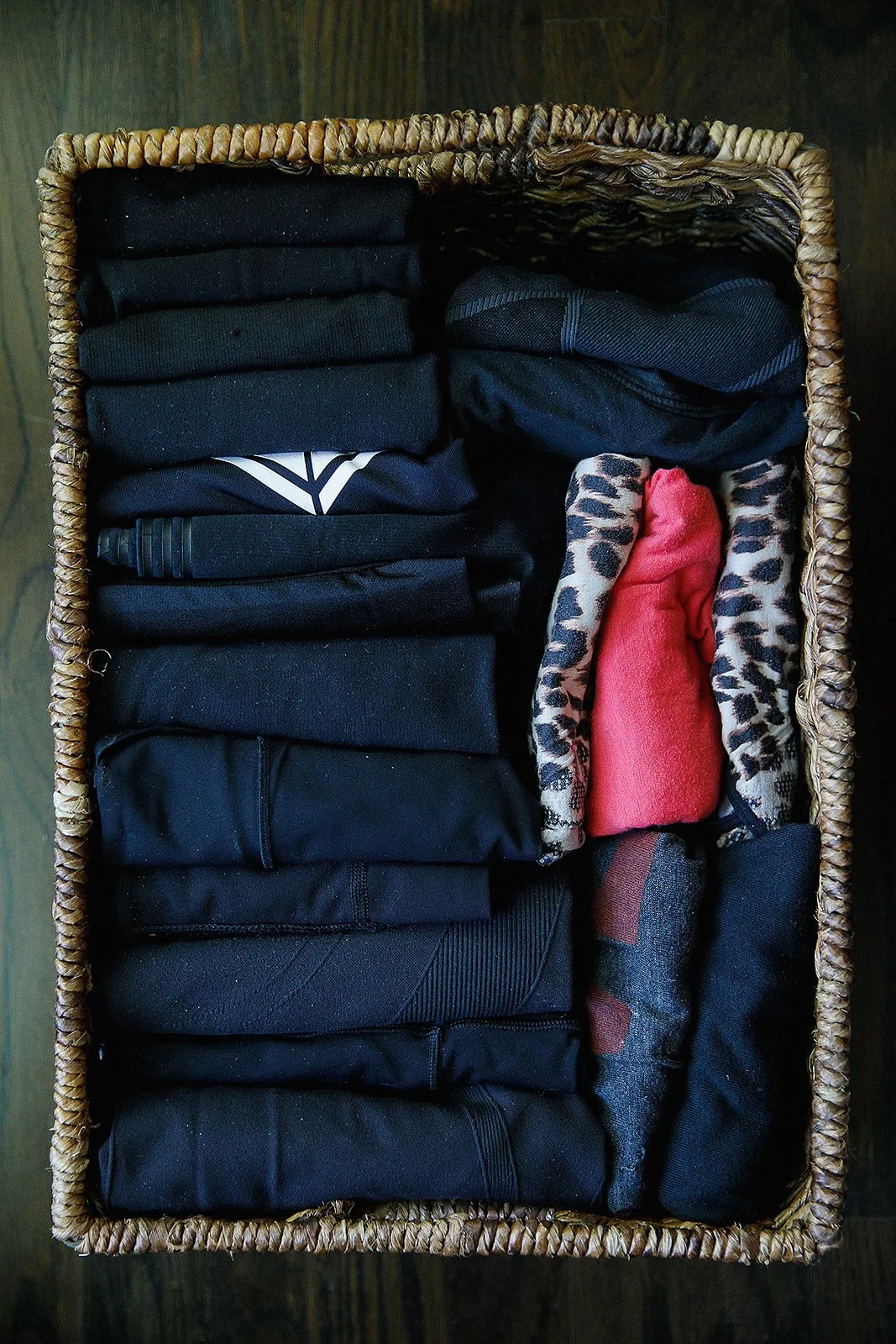
You can use things you already own, like this woven basket, to store folded clothing, for example.
A lot of people go out and buy containers before they’ve sorted through their things, before they’ve decided what they’re keeping, and before they know where anything is going to live. Then they end up with a bunch of bins they don’t know what to do with.
I actually love organizing with what people already have. Usually, we can use what you have and then supplement with something new where it makes sense.
This is especially true with pantries. People see beautiful pantries on Pinterest or social media and think everything needs to be decanted into matching containers. Sometimes that makes sense, but sometimes it creates more work.
Every time you come home from the grocery store, you have to take everything out of its packaging, put it into containers, and then eventually wash those containers. If you’re a busy family, that can add a lot of time and maintenance.
Containers can also be very helpful for zoning a pantry, closet, or cabinet.
But there should be a purpose. You want to choose containers that work for your real life.
Lesson 5: The best organizing system is the one you’ll actually use.
One of the biggest things I’ve learned is that organizing is personal.
People don’t all live the same way. Families have different routines, different priorities, different cultures, different schedules, and different ideas about what feels manageable.
What works for one family may not work for another. Just because someone else has matching hangers or a Pinterest-worthy closet doesn’t mean that has to be your goal.
There is no one right way to organize.
Your home has to work for the way you actually live.
That’s why I don’t want people comparing their homes to someone else’s. It doesn’t help. It usually just makes people feel like they’re doing something wrong.
For some people, that means clear containers so they can see what they own. For others, it means fewer categories, fewer steps, or a system the whole family can maintain.
The best organizing system is not necessarily the prettiest one. It’s the one you’ll actually use.
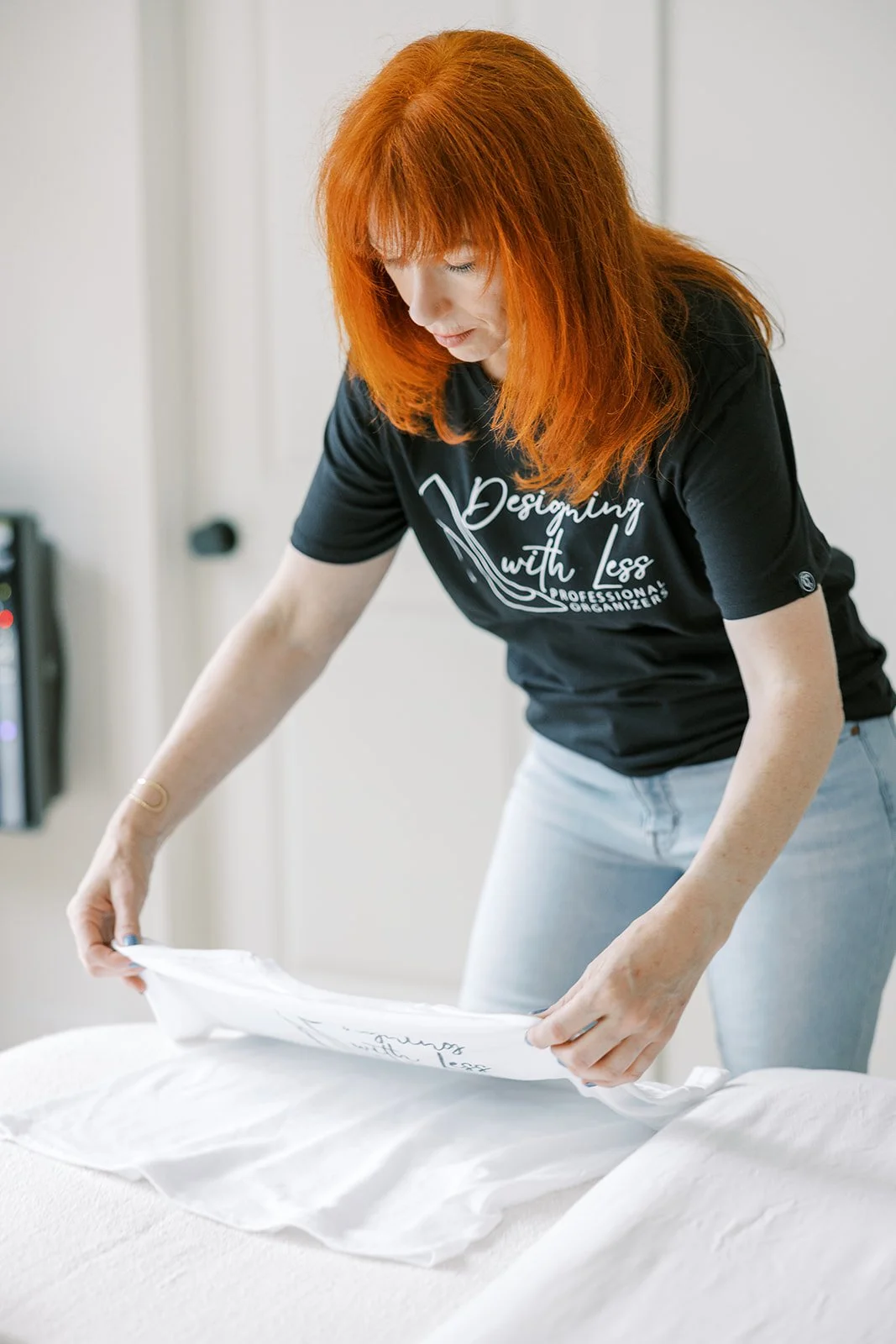
What’s the right way to organize? It’s the one that works for your life, the one that’s easy to use consistently.
Lesson 6: Sometimes clutter belongs to a life you’re no longer living.
I see this a lot with clothes.
Many women, especially women of a certain age, are ready to get rid of the business clothes, the suits, the heels, and the dressy pieces they wore in another season of life.
They may not work in the same kind of workplace anymore. They may not dress the same way anymore. They may simply be ready to feel comfortable.
But those clothes can still be hard to release because they represent a version of who you were, or who you thought you had to be.
I recently worked with a client who wanted to purge her wardrobe. Once we got started, she was ready. She got rid of about three-quarters of her wardrobe. She knew what no longer fit her life, but she had been too overwhelmed to do it by herself.
Afterward, she felt so much lighter.
That happens a lot. People are carrying things that belong to a past job, a past season, a past identity, or a version of themselves they no longer need to dress for.
And it’s not just clothes. It can be books, papers, kitchen items, hobby supplies, sentimental pieces, or things people keep “just in case.”
But sometimes you reach a point where you realize, “I don’t need all this anymore.”
That’s why I tell people to make intentional choices now. Buy fewer things. Choose better quality when you can. Think about what you actually use and what makes sense for your lifestyle, so you are not doing all of this work later.
Lesson 7: The goal isn’t perfection — it’s feeling lighter.
Organizing is not about forcing people to become minimalists.
We’re not there to tell you to get rid of everything. We’re there because you called us for a reason. You wanted something to feel different.
The goal is to help you let go of what is unnecessary so the things that remain are the things you actually use, love, need, and enjoy.
Your home should make your life easier, not heavier. That doesn’t mean every drawer has to be beautiful or every shelf has to be styled. It means you can find what you need, see what you have, and maintain the space without feeling overwhelmed.
I’ve learned that people feel lighter when they let go. Not always immediately, and not always easily, but once the excess is gone, there is usually a sense of relief.
That is what we’re really working toward.
Not a perfect home or one that looks like someone else’s.
Just more breathing room and a home that works for you.
Ready to declutter and feel lighter about your own home?
If you’ve been thinking about working with a professional organizer but haven’t felt ready yet, I hope this gives you a little more insight into what the process is really like.
You don’t have to know where to start. You don’t have to feel embarrassed. You just have to be ready for a little support.
When you are, I’m here to help.
Xoxo,
Michelle
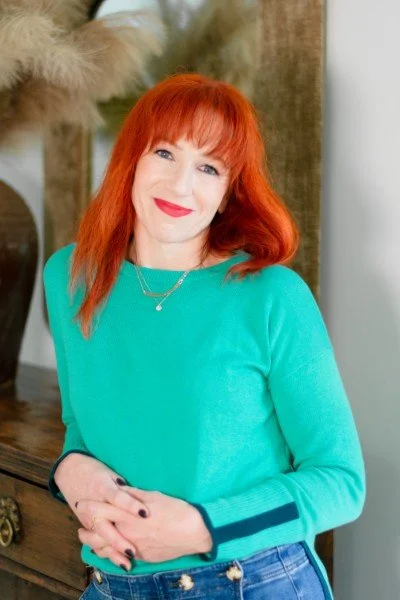
Michelle Parravani, professional organizer in Atlanta area