
How to Reduce Household Waste and Keep Your Home Decluttered
Decluttering, sustainability, and limiting household waste all go hand in hand when it comes to keeping your home organized.
Think about it this way. Once you’ve decluttered and organized your home, you want to make sure it’s easy to maintain. One of the best ways to do that is to limit what comes into your home. That’s also how you can limit how much trash a home produces each week.
Some people aim to produce just one 13-gallon bag of trash per week. That can be a helpful goal, but it doesn’t need to become another source of pressure. A better goal is to notice what your household throws away most often and reduce what you can in a way that feels realistic and sustainable.
Today I’m sharing a little bit about why reducing household trash matters and lots of tips on how to do it.
Why should you reduce the amount of trash your home creates each week?
Most household trash eventually ends up in a landfill or another local waste facility. Waste can sometimes even end up as pollution in rivers, oceans, and other natural spaces.
But reducing the amount of trash a household produces isn’t just about the environment. It can also make your home more efficient and keep it organized.
When you bring less into your home in the first place, you’ll have less waste, whether it’s trash or recycling. That means you’ll have fewer cardboard boxes, fewer plastic containers, and less other packaging material to discard.
A lower-waste home is often easier to keep decluttered because you are reducing the cycle of buying, storing, sorting, recycling, donating, and throwing away.

(Photo by Markus Winkler, Pexels)
Start by noticing how much trash your home produces
Before you change anything, start by simply noticing how much waste your home produces now.
How many bags of trash does your household produce in a typical week? One bag? Three bags? Six bags?
There is no perfect number, so don’t judge yourself when you do this exercise. The goal is simply to notice your patterns.
If your household currently produces six bags of trash each week, maybe a good first goal is any decrease in that number. Maybe the first goal is to get down to four bags. Then, once that feels manageable, you can see if there are other changes you can make.
The key is to discover what’s realistic for your home and what you can maintain.
Just like creating any new habit, you’re likely to give up if it becomes too complicated, too expensive, or too much of a chore. That’s when it’s easy to stop doing it and go back to the old way of living.
Be realistic about your lifestyle
You don’t have to make dramatic changes all at once to decrease how much trash your home creates each week.
Homes with children, pets, busy schedules, dietary restrictions, or medical needs may create more trash than someone living alone. Any changes you make should fit your lifestyle.
The best changes are the ones you can repeat without thinking too hard.
If a new habit feels difficult to keep up with, start smaller. For example, try swapping just one thing, such as using bar soap instead of body wash that comes in a large plastic container.
Be more intentional about what you buy
One of the easiest ways to reduce household waste is to be more intentional about purchases.
Only buy what you need. This applies to groceries, household supplies, clothing, toys, decor, and all the little things that seem harmless but end up creating clutter.
Groceries are a great place to start. You can try to plan meals around the food already in your fridge, freezer, and pantry to cut down on waste. When you buy too much food you end up wasting it and all that extra packaging.
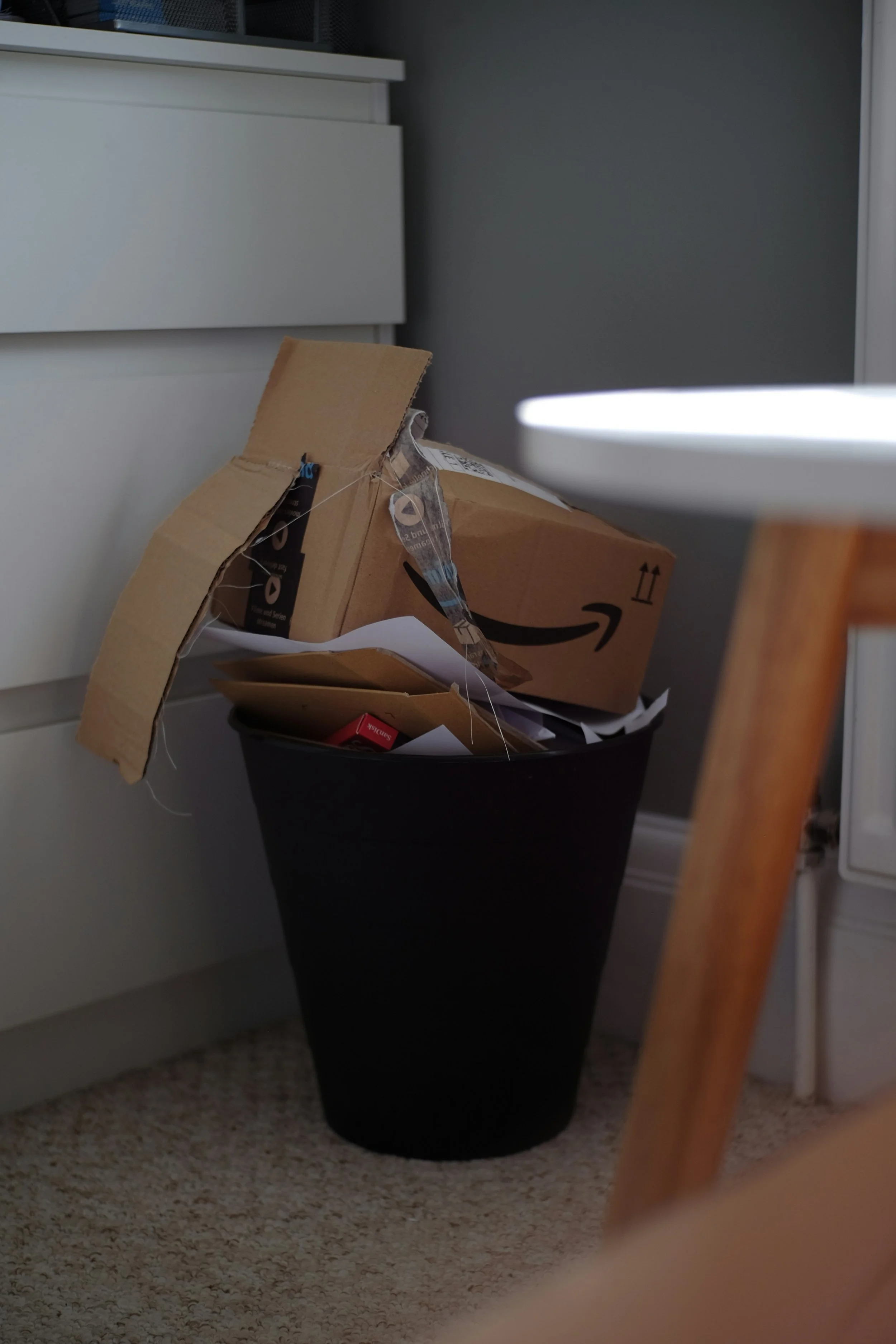
The same idea applies to other kinds of shopping. Ordering from online stores like Amazon can be convenient, but it also comes with a lot of packaging you have to break down, recycle, store, or throw away. To really cut down on trash and clutter, it helps to pause before ordering and ask:
Do I really need this?
Do I already own something that would work?
Can I buy this locally with less packaging?
Is this going to solve a real problem, or is it just going to become one more thing in my house?
Every item that comes into your home needs somewhere to go. The less you bring in, the less you have to manage later.
(Photo by Sean Robbins, Unsplash)
Reduce single-use plastics where you can
Single-use plastics are a good place to look when you are trying to reduce household waste.
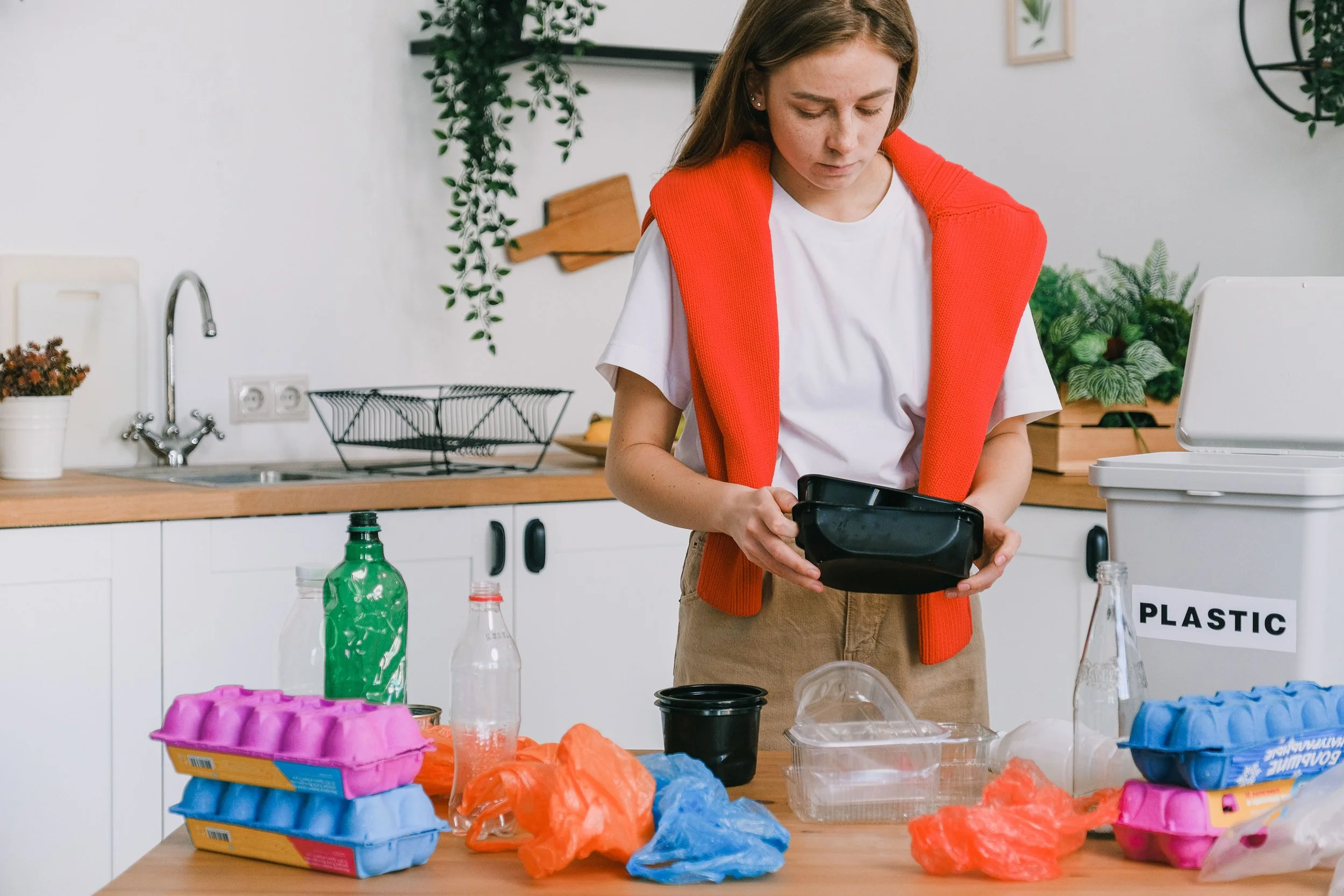
Don’t try to eliminate every piece of plastic from your home overnight. You can start by noticing where single-use items show up most often. Every household has different habits, so single-use plastics show up in different places for different people.
For your home, it may be plastic water bottles or produce bags. Or maybe it’s takeout containers, snack packaging, plastic wrap, or the large plastic jugs that hold laundry detergent.
One simple grocery store change is to bring your own produce bags. Or, for many fruits and vegetables, you can skip the bag altogether and wash everything well when you get home.
It may feel like a small thing, but even tiny habits add up to big change when they’re repeated week after week.
Try a refillery for household basics
I am a big fan of refilleries.
Locally, places like the refillery Joyful Jarra make it easier to refill household products without bringing home another large plastic container every time.
Laundry detergent is one of my favorite places to start. (This laundry detergent swap is the hill I will die on. 😄)
Those massive plastic laundry detergent jugs take up space and create a lot of waste. If you can replace them with a refill option that works for your lifestyle, it’s an easy swap that’s much better for the environment.
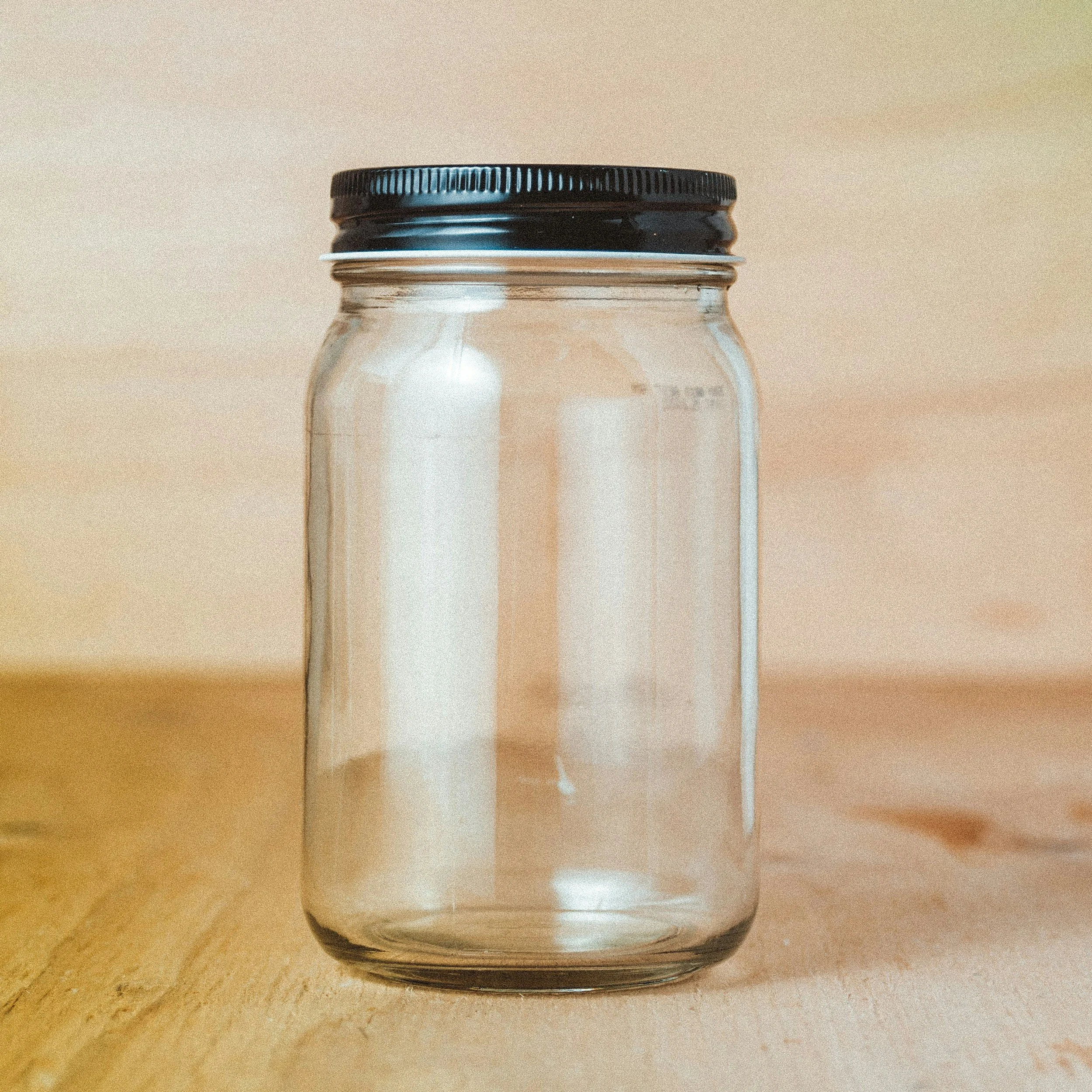
You don’t even need to buy special containers to get started. You can reuse jars you already have in your kitchen. If you finish a jar of pasta sauce, wash it out and use it to store washing powder, laundry soap, or another household refill.
It doesn’t cost any more than buying the product at the store, and it keeps a perfectly useful jar from going straight into the recycling bin or trash.
(Photo by Kier in Sight Archives)
Reuse what you already have
One of the biggest misconceptions about sustainable living is that you need to buy a whole new set of “sustainable” products.
You don’t. In fact, buying a lot of new things, even to be more sustainable, can create its own kind of clutter.
Before you buy new jars, bins, bags, or containers, look at what you already own. Can you wash and reuse glass jars? Can you use the tote bags you already have? Can you repurpose a basket, box, or container instead of buying something new?
You can ask yourself these questions as you’re shopping, too. What containers can you reuse when something has served its original purpose? Reducing waste and decluttering are both about using what you have more intentionally.
Make low-waste habits easy to maintain
The easier a habit is, the more likely you are to keep doing it.
Keep reusable grocery bags in your car or by the door. Store produce bags inside your grocery bags. Put a small basket or bin near the door for items that need to be returned, donated, or refilled. Create a spot for clean jars you want to reuse.
If you’re trying to reduce food waste, create an “eat first” area in your fridge or pantry. That way, leftovers, opened snacks, and produce that needs to be used soon don’t get forgotten.
The goal isn’t to make your everyday life more complicated. The goal is to create simple systems that help your home function better.
(Photo by Shvets Production, Pexels)
A more organized home starts with less coming in
Reducing household waste isn’t about never creating trash or hitting some magic number of bags of trash per week. It’s about paying attention.
What are you throwing away every week? What are you overbuying? What packaging keeps showing up in your trash? What small changes would make your home easier to maintain?
Maybe your goal is one bag of trash a week. Maybe your goal is simply one less bag than you produce now.
Both are worthwhile.
A lower-waste home is often a calmer home because there’s less to sort, less to store, less to clean around, and less to feel guilty about later.
If you want help decluttering your home and creating simple systems that are easy to maintain, reach out to us. We love helping people simplify their homes in realistic, sustainable ways that don’t feel overwhelming.
Xoxo,
Michelle

Michelle Parravani, Atlanta professional organizer